Towing in Germany: what is permitted and what isn't?
Learn when towing vehicles in Germany is permitted and when not. Our guide explains the legal situation on public roads and private land, including unlawful interference with possession, self-help under § 859 BGB, and tips on digital documentation. Ideal for owners, tenants and property managers.

 Parking Law & Practice5 min read
Overview.
Learn when towing vehicles in Germany is permitted and when not. Our guide explains the legal situation on public roads and private land, including unlawful interference with possession, self-help under § 859 BGB, and tips on digital documentation. Ideal for owners, tenants and property managers.
Table of contents
Illegal parkers — an everyday problem
Many property owners and tenants in Germany know the problem: a stranger's vehicle is parked without authorisation in a private parking space or blocks a driveway.
In such cases the starting point is clear: anyone who parks on someone else's private land without permission is disturbing their possession — and the entitled person may defend themselves against it.
Legal basis for towing
In Germany a distinction is made between public roads and private land:
- Public roads and spaces — e.g. streets, public car parks, pavements
- Private land — e.g. private parking spaces, driveways, courtyards, customer car parks, residential complexes
Illegal parking on public roads is an administrative offence (Ordnungswidrigkeit) under the German road traffic regulations (StVO). The local public order office (Ordnungsamt) or the police are responsible there — private individuals may not have vehicles towed from public spaces themselves.
On private land, enforcement is generally a matter for the entitled person, i.e. a civil-law matter. The Ordnungsamt is usually not responsible there. The relevant rules are the possession-protection provisions of the German Civil Code (BGB).
Towing on private land — what's allowed?
The basic principle:
A vehicle parked without authorisation on private land may be towed. Unauthorised parking is a disturbance of possession, against which the possessor may defend themselves.
Legal basis:
- § 858 BGB: unauthorised parking on private property is unlawful interference with possession (verbotene Eigenmacht).
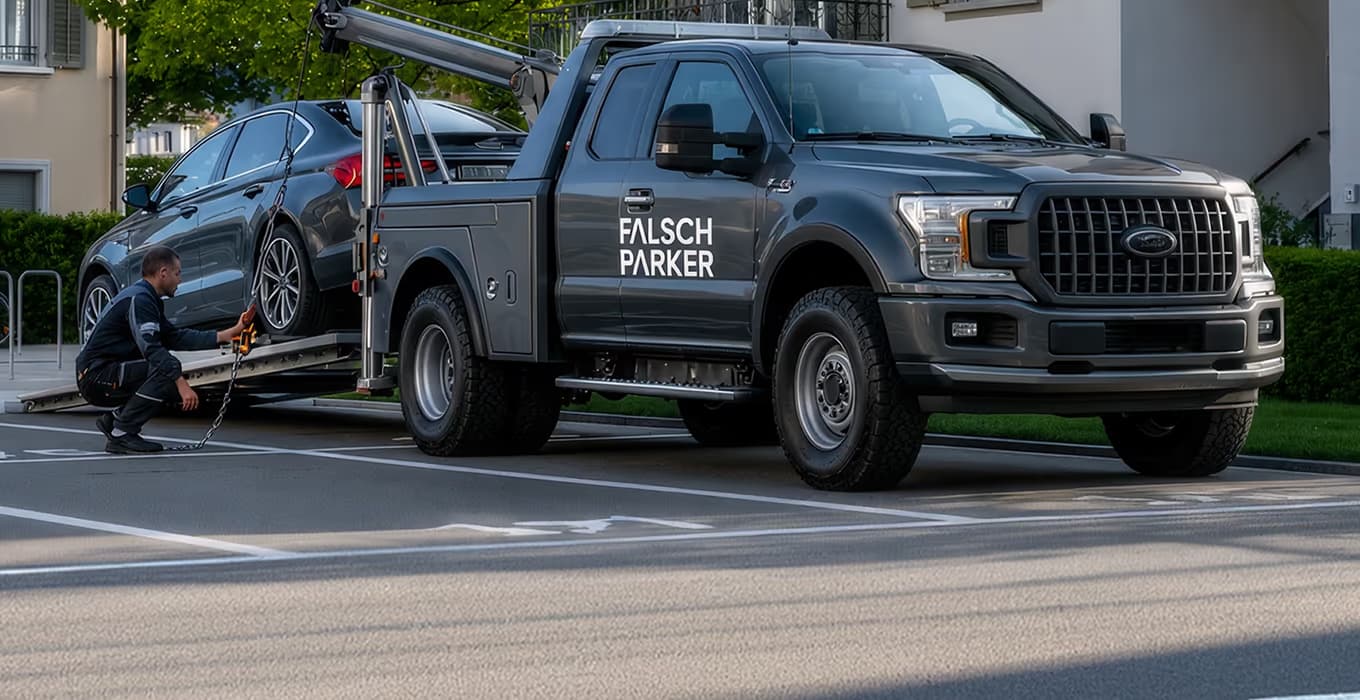
- § 859 BGB: the possessor may use self-help against such interference — this generally includes having the vehicle towed.
- Federal Court of Justice (BGH), judgment of 05.06.2009 – V ZR 144/08: towing from a private car park is permissible; the person responsible must bear the towing costs as damages.
- BGH, judgment of 04.07.2014 – V ZR 229/13: only towing costs at the customary local rate (ortsüblich) are recoverable. The costs of general parking monitoring are not.
How these costs are made up is explained in our article What does it cost to have a vehicle towed?
Who may commission a towing service?
On private land, the person whose possession is disturbed may commission a towing service — that is, the owner or possessor of the property or of the affected parking space. This can include tenants or lessees who have been given a space to use (e.g. an assigned space in their tenancy agreement), or the property management acting on the owner's behalf.
No order from the authorities is required on private land, as this is not a matter of public law but of civil law.
For the towing service to act, many companies require:
- proof of the possession or use right (e.g. tenancy agreement, proof of ownership, property manager's authorisation)
- or a written statement on the disturbance of possession, to safeguard against liability risk
In emergencies — such as a blocked fire-access lane — call the police on 110.
What you should absolutely avoid
Even when a stranger's vehicle violates your right of possession, you should always act with restraint and within the law. The following responses are not permissible self-help and can have legal consequences for you:
- Having a vehicle towed without entitlement or proof: anyone who commissions a towing service without being the possessor or otherwise entitled risks a dispute and counterclaims from the vehicle keeper.
- Blocking, damaging or boxing in the vehicle: such measures go beyond permitted self-help and can have criminal and civil consequences.
- Publicly exposing the vehicle keeper — for example by posting photos online: evidence photos and number plates may only be used for the purpose of enforcing your claims (Art. 6(1)(f) GDPR). Publishing them is not part of that purpose.
All of this can weaken your position — even though the illegal parker is the one in the wrong.
Digital documentation as a first step
Before you take steps such as towing an unauthorised vehicle, you should document the situation. Full, factual evidence preservation is helpful not only for the towing service but also in legal disputes.
The following details are particularly important:
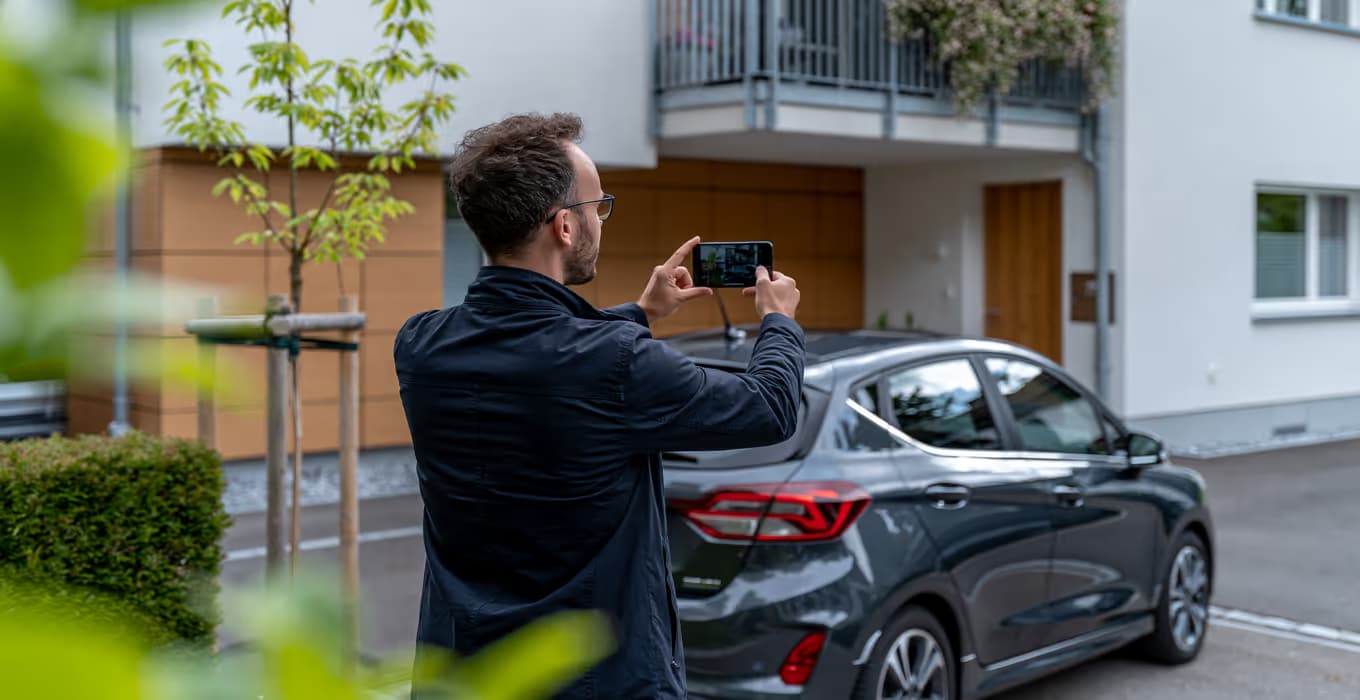
- Photos of the vehicle — ideally with the position, the number plate and the windscreen clearly visible, to record whether a phone number or other contact details for the driver were left.
- Precise location description — e.g. address, parking-space number, position on the premises
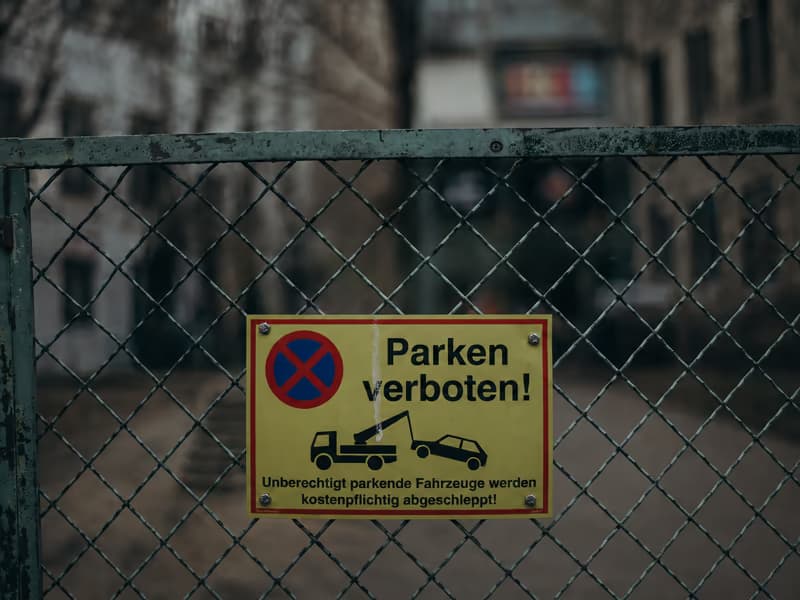
- Photos of the signage at the entrance
These records can be decisive in civil proceedings to demonstrate your possession and the disturbance. Use the data only for this purpose and delete it once it is no longer needed.
Tip: the platform FalschParker.io offers a practical solution for recording such incidents in a structured way. You scan the number plate, take a photo and confirm the location — especially helpful for recurring problems or in residential complexes with many parties. If needed, you can also request a towing service via the app.
Conclusion: towing is allowed — if you act legally correctly
When a stranger's vehicle is parked without authorisation on your private property, you don't have to accept it. The legal situation in Germany gives you, as the owner or authorised user, clear means to defend yourself against the disturbance of possession.
Towing is generally permissible — particularly with clear possession and a documented disturbance.
You are acting within the law (§§ 858, 859 BGB) when you secure evidence and use the towing service as a self-help measure. Recoverable are the towing costs at the customary local rate.
When exactly you may have a car towed and how to proceed in practice is covered in When can you have a car towed?
With digital support (e.g. via FalschParker.io), you can even record illegal parkers in a structured way, document recurring cases and keep all evidence in one place.
In short: anyone prepared acts with confidence and legal certainty — and protects their property in the long run. Your parking space is not public space. You have the right to defend it.
This article is general information and not legal advice.
Protect your parking spot today.
FalschParker helps property owners and tenants enforce private parking rules — without paperwork.
Download app